


|
Four & Five Star Quality
|

|
Members on this page offer B&B accommodation in and around:
Johnshaven (1) - Ballater (1) - Aboyne (1) - Inverurie (2) - Strathdon (1) - Fordyce (1)
Elgin (1) - Forres (1)
Please note that double/twin room prices are per person per night based on two persons sharing. To make enquiries or bookings, please contact the proprietor direct via phone, fax or email as detailed on the relevant entry. If you are outside the UK, first dial the appropriate international dialing code for your country (011 from the States for example), then dial 44 and omit the initial 0 of the number given in these pages, before dialing the remaining digits.
Aberdeen, the granite city, is one of the most northerly cities in Britain and the 'oil capital' of Britain too. Today, the oil boom is waning but, even so, the busy docks have oil tankers as well as fishing boats and container ships calling in frequently whilst Aberdeen airport chugs constantly with helicopters taking men to and from the rigs. It's a city lively with lots of shops and new shopping arcades to explore but it is also a city with a history. Interesting buildings like Provost Ross' House, the Maritime Museum, and Aberdeen University's Marischal College are right in the heart of town, as is the Art Gallery, a short walk from Union Street, the dignified main thoroughfare.
The city lies between the two great rivers, the Dee and the Don - both good salmon rivers, and the stretch of coast between the two river mouths has a splendid sandy beach. A little way upstream on the Don, is the Brig o' Balgownie, with some quaint old cottages clustered around it. Aberdeen has won the Britain in Bloom competitions so many times that it was barred from entering to give everyone else a chance! In spring, especially, the roadside verges and the river banks are bright with a succession of crocus, daffodils and narcissi which give way to masses of roses in summer. Duthie Park is a carpet of colour and, if wet, visitors can retreat to the cactus houses and imagine themselves in a tropical world with noisy parrots in the greenery at roof level and huge sinuous carp hiding in the pools.
|
Out of Aberdeen and there is lots to do and see - this is castle country and there are so many to choose from on the Castle Trail: Crathes; Craigievar; Fyvie; Fraser; Dunottar; Muchalls; Braemar and Balmoral. If you get bored with castles there are beautiful gardens at Pitmedden, Kildrummy and again at Crathes Castle. |
 Balmoral Castle |
Royal Deeside is famous and justly popular amongst visitors who explore the towns along the Dee: Banchory, Aboyne and Ballater. In summer, you may glimpse salmon leaping up the waterfall under the Bridge of Feugh, not far from the centre of Banchory. Follow the side road alongside the River Feugh then turn off, following the signs to the Forest of Birse. Here it is peaceful with no sound but the tumbling waters, the ever-present sheep and maybe a distant buzzard mewing over the hill tops.
In May, it is bright with yellow gorse, purple in August with heather and, in autumn, the rowan trees are laden with red berries. Back on Deeside, at Potarch, is the bridge where a famous local strongman, Donald Dinnie, is reputed to have carried two huge boulders across the river. The stones are still there, outside the Inn. At Aboyne watch the Highland Games take place on the village green before resuming the well-trodden route to Balmoral and Braemar.
Everywhere, in stone circles and standing stones, is the evidence of prehistory. Not far from Aberdeen Airport, near Inverurie, just off the A96, is Archaeolink an interpretive centre about these monuments and the people who built them. Fascinating names like Clinkstone, Maiden Stone and Cloven Stone invite the curious while the intriguingly shaped hill, Bennachie, looms in the background. It's a land of mystery where your imagination can take flight and you can forget the present, wondering about the past.
As well as the Castle Trail, this area also has the Coastal Trail and the Whisky Trail, which links many of the Speyside area distilleries. Turn off the A96 at Huntly on the B9022 to Portsoy and explore east to Banff and Macduff or west to Cullen along the Coastal Trail. Some of Scotland's finest fish is landed at the harbour at nearby Buckie. Rejoin the A96 at Fochabers, a lovely little town favoured by antique hunters. On the western outskirts of Fochabers, is the Baxter's Factory, where visitors can view the making of Baxter's well known soups and preserves.
Beyond Fochabers, is the elegant town of Elgin with its imposing and historic cathedral ruins and dignified Victorian town centre. West from Elgin, the A96 bypasses Forres. It's worth going through the town though to see the floral displays, which have won this town prizes in the "Scotland in Bloom" and "Britain in Bloom" competitions, and also Sueno's Stone, a huge Pictish standing stone covered in carvings.
ELLINGTON
Mrs Margaret Gibson
Station Place - Johnshaven DD10 0JD
Tel: 0870 225 2632
Email:
Click to view web site with more details & photos
|
 |
|
Modern family home in old fishing village 28 miles south of Aberdeen. Ideally positioned to visit Glen Esk and 14th century Dunnottar Castle. Twin room on ground floor. Small restaurant in village pub. Please be assured of every home comfort.          Dogs accepted by arrangement |
CRAIGARD LODGE
Mary & George Walker
Abergeldie Road - Ballater AB35 5RR
Tel: 013397 53258
Email:
Click to view web site with more details & photos
|
 |
|
Magnificent situation near village centre with panoramic views over golf course to woods and mountains beyond. High quality accommodation and luxury en suites. Ideal for touring Royal Deeside, the Cairngorms National Park, Whisky and Castle Trail country. Excellent restaurants nearby. Warm welcome.     Animal free house |
DRYBURN HOUSE
Sheila Hallatt & Fraser Fergus
Ordhead - Inverurie AB51 7RL
Tel: / Fax: 01330 833653
Email:
Click to view web site with more details & photos
|
 |
 |
Take time out to relax at our traditional 19th Century farmhouse & steading. Set in an acre of peaceful gardens with panoramic views of surrounding hills. Castles, stone circles & Royal Deeside close by. Spacious accommodation. Aromatherapy treatments available on the premises. Vegetarians & vegans welcome. Banchory 13 miles.   Animal free house |
FRIDAYHILL
Shena McGhie
Kinmuck - Inverurie AB51 0LY
Tel: 01651 882252 / Fax: 01651 882252
Email:
Click to view web site with more details & photos
|
 |
|
Enjoy a break in our luxurious country home designed to offer unique and comfortable accommodation in a tranquil, picturesque setting in rural Aberdeenshire. Ideal location for Castle and Whisky trails, stone circles, Archaeolink, Royal Deeside and coast. Aberdeen Airport 7 miles.  Animal free house Scotland's Best certificate |
STRUAN HALL
Phyllis & Michael Ingram
Ballater Road - Aboyne AB34 5HY
Tel/Fax: 013398 87241
Email:
Click to view web site with more details & photos
|
 |
|
The magnificent scenery of Royal Deeside, the unhurried charm of its villages and people, plus an excellent climate, make Aboyne a most favoured location. Struan Hall is a lovely family home, quietly situated in a spacious woodland garden.  Dogs by arrangement |
AULD CUMMERTON
Carole & Bruce Luffman
Bellabeg - Strathdon AB36 8UP
Tel: 019756 51337 / Fax: 019756 51349
Email:
Click to view web site with more details & photos
|
 |
|
Auld Cummerton nestles high in the Grampian mountains on the edge of our own woodland and within the Cairngorm National Park. We offer magnificent views, antiques and country furnishings and a slower pace of life. On the Castle, Whisky and Garden trails. 
|
ACADEMY HOUSE
Sandra & Richard Leith
School Road - Fordyce - Nr Portsoy AB45 2SJ
Tel: 01261 842743
Email:
Click to view web site with more details & photos
|
 |
|
A Scottish welcome is assured in this house in the picturesque conservation village of Fordyce. Academy House has been lovingly restored offering comfort, peace and tranquillity to the most discerning of visitors. Splendid home cooked dinners. Well located for touring. 11 miles from Banff.  Dogs by arrangement |
THE CROFT
Mrs Ann Cartmell
10 Institution Road - Elgin IV30 1QX
Tel/Fax: 01343 546004
Email:
Click to view web site with more details & photos
|
 |
|
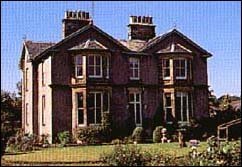
Beautiful Victorian town house, built in 1848, spacious rooms superbly furnished with guests' comfort in mind. Central, peaceful location, ideally situated for exploring Whisky, Coastal and Castle trails, golf, dolphin watching, "Biblical Gardens". Selected by "Which?", AA 5 Diamonds.  Animal free house Scotland's Best certificate |
MILTON of GRANGE FARMHOUSE
Hilda & Alexander Massie
By Forres - Moray IV36 2TR
Tel/Fax: 01309 676360
Email:
Click to view web site with more details & photos
|
 |
|
Warm welcome at family farm. En-suite rooms. Delicious Scottish cuisine. Near Forres, Kinloss and Findhorn with golf, watersports, beaches, walks. Excellent for exploring Coastal, Castle and Whisky trails, Baxters of Speyside, Aberdeen and gateway to the Highlands. 26 miles from Inverness Airport.  Scotland's Best certificate Animal free house |

To make enquiries or bookings, please contact the proprietor direct via phone, fax or email as detailed on the relevant entry. If you are outside the UK, first dial the appropriate international dialing code for your country (011 from the States for example), then dial 44 and omit the initial 0 of the number given in these pages, before dialing the remaining digits.
Practical information including currency exchange rates, transport, driving times, maps, weather, etc. is provided to assist you on our travel info page.
This web site also has B&B listings in:
Edinburgh, Lothian and Borders - Fife, Angus & Stirling - Perthshire & The Trossachs
Inverness, Loch Ness and Nairn
Northern Highlands & Orkney - West Highlands & Skye - Aviemore & the Cairngorms
Argyll & Loch Lomond - Greater Glasgow, Ayrshire, Dumfries & Galloway

Please note that all details of establishments are as provided by the proprietors
who are solely responsible for the standards of their establishments
and for the accuracy of information displayed on this web site concerning them.
December 2004
www.scotlandsbestbandbs.co.uk/aberdeen.htm
Site designed by The Internet Guide to Scotland
Hits: